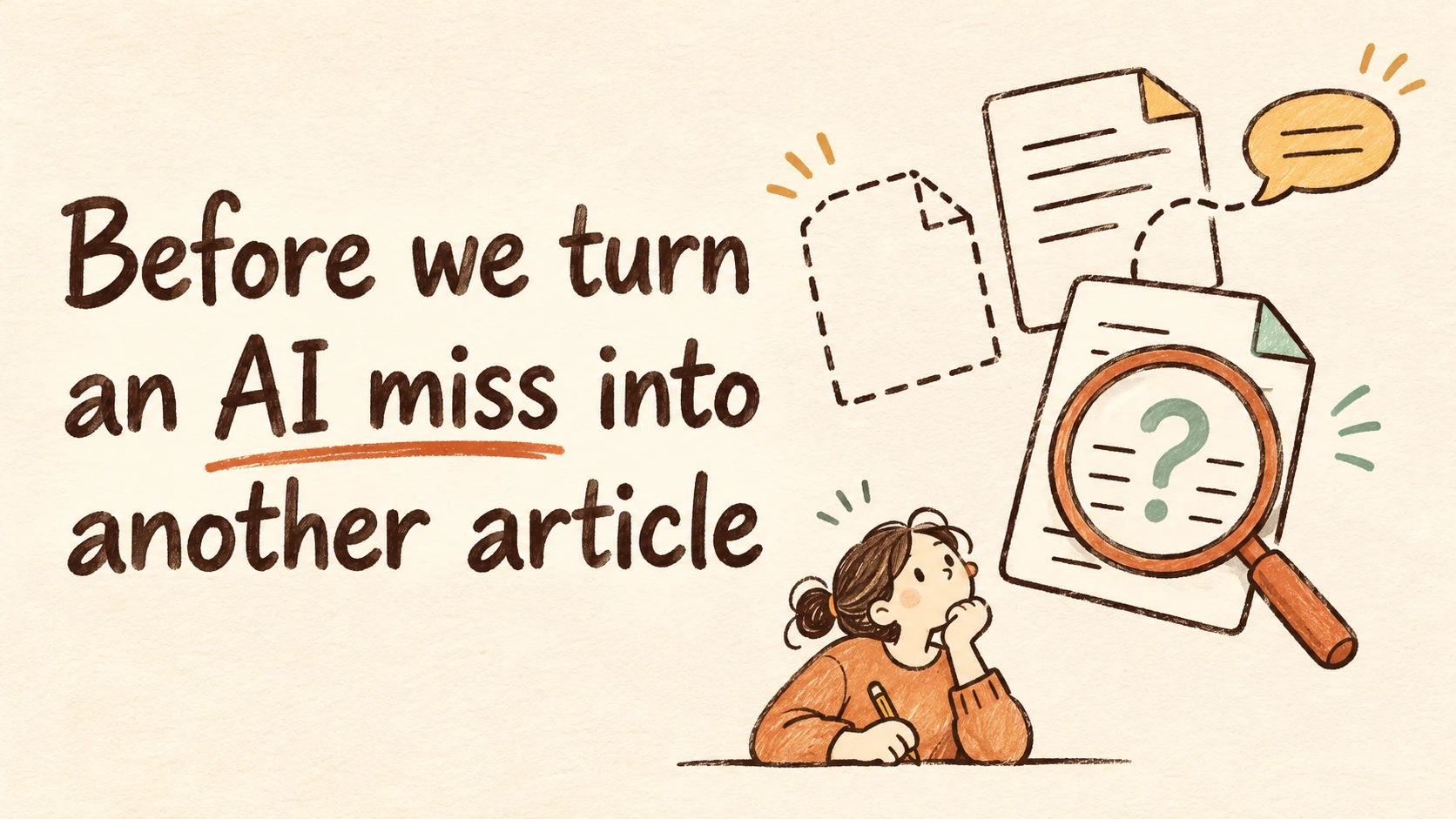
We added a content-gap view to Radar, and the cell I care most about says "Retrieval unknown". It is the case where we have a matching page and no sign of the brand in the answers, but the scan did not record whether the engine retrieved our domain.
Writing another article would be a guess. The missing brand mention tells us what the answer left out; it cannot tell us whether the website lacks a page that answers the buyer's question.
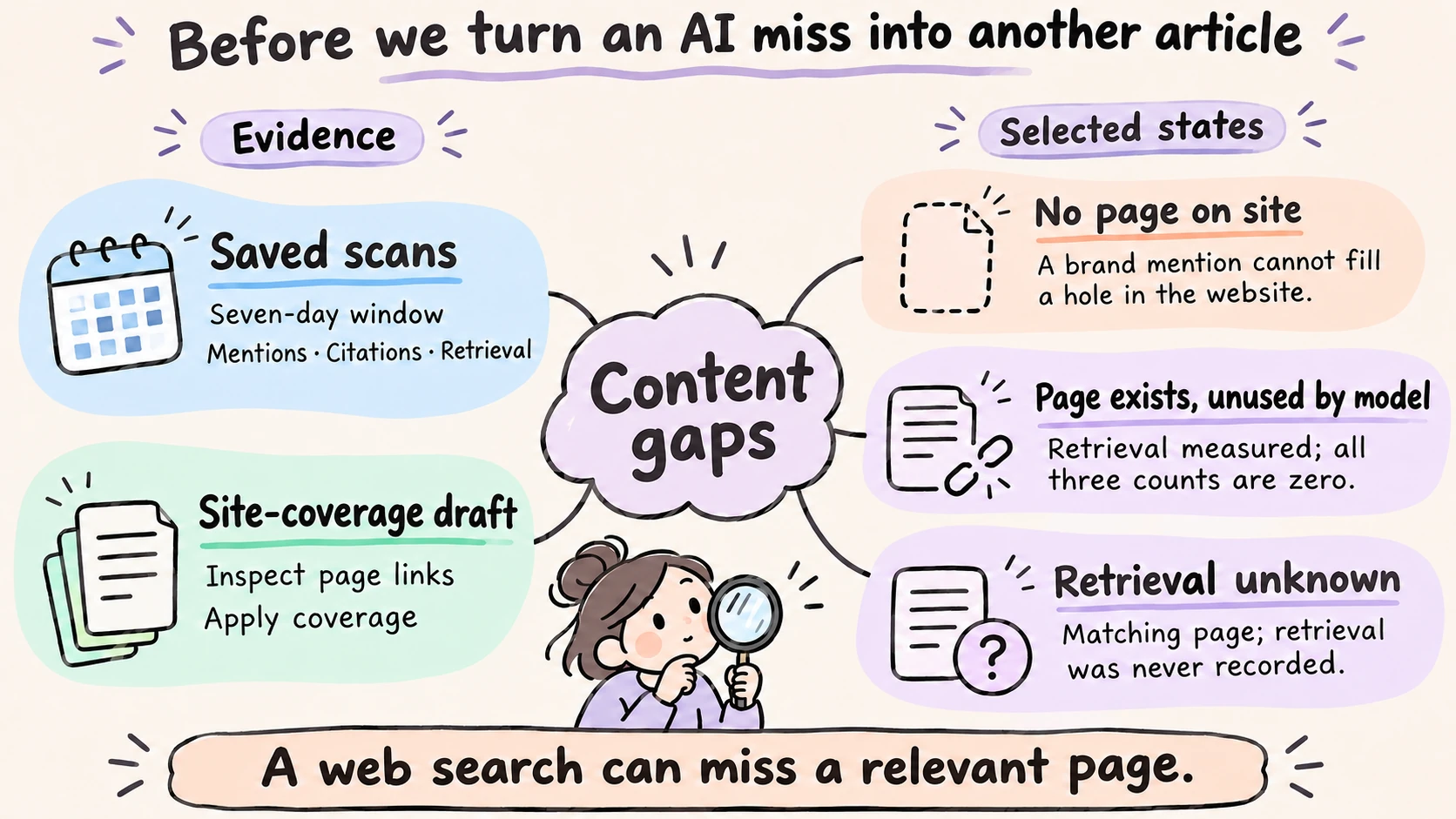
The November 13 implementation joins two kinds of evidence. Each row is an enabled buyer prompt that does not name the brand, with a separate cell for each engine. The counts come from the seven-day window ending at the selected scan. A separate site-coverage pass looks for pages on the brand's own domain that answer those prompts. Opening the report reuses the saved scans.
That second pass produces a draft. Staff can inspect the proposed page links before clicking "Apply coverage", which stores the snapshot used by the matrix. The follow-up interface changes keep the matrix visible below the draft and show every proposed row, so a person can inspect the links while comparing them with the existing readings.
Suppose a matching page exists. If the scan records retrieval and the brand was neither retrieved, mentioned nor cited in that window, Radar puts the cell in "Page exists, unused by model". I would inspect that page and the sources the engine cited before commissioning another article, because we already have content aimed at the question.
There is an awkward case in the opposite direction: an answer can name the brand even when the site-coverage snapshot says "No page on site". The classifier keeps the missing-page label and explains that the model still named or cited the brand. That mention cannot fill a hole in the website.
An empty scan gets its own label. So does a pending site check. And when retrieval was never recorded, "Retrieval unknown" preserves that missing evidence instead of turning it into a measured zero. Opening a cell shows the separate mention, citation and retrieval counts, suggested pages and other domains cited in the window.
The Content Gap Finder still depends on the quality of its site-coverage draft. A web search can miss a relevant page, and applying the draft does not make that judgment certain. Generation and Apply are staff-only; the brand's owner can read the report. Before using a missing-page label as a writing brief, we need to check the site's existing content and correct or rerun the coverage assessment when it disagrees.